The Most Common Cause of Diarrhea in Cats
- Svetlana Jacobson
.jpeg/v1/fill/w_320,h_320/file.jpg)
- Jul 5, 2025
- 3 min read
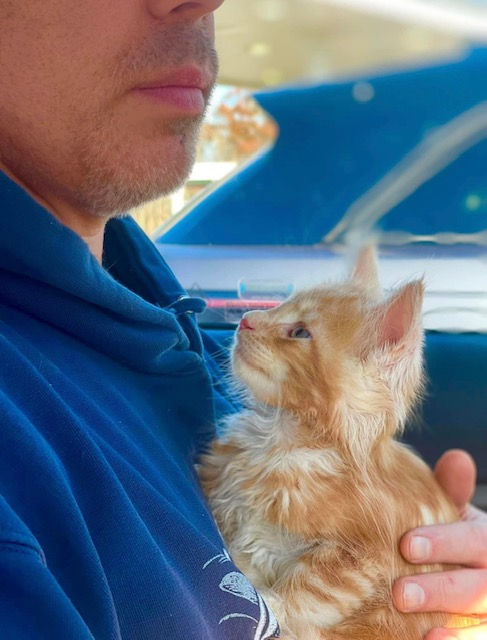
A client reached out to me about a kitten she got from me over a year ago. His name is Raja. Since he was little, he's had chronic diarrhea. She’s taken him to multiple vets, gone through endless tests that showed nothing, spent tons of money, and put the poor cat through enough stress to break anyone down. Raja was pumped with unnecessary meds that didn’t help. After all that, a vet finally prescribed a hydrolyzed diet — and guess what? The diarrhea stopped.
So, while the diarrhea issue is technically “solved,” now the owner is worried that Raja isn’t getting enough of all the “essential vitamins” listed on the fancier foods she used to feed him. But going back to the vet is no longer an option — Raja literally starts panicking as soon as she even thinks about pulling out the carrier. That’s why she came to me. And frankly, I do give out a lot of health advice.
I get messages like this often. More often — I don’t. Most people go through the same route: diarrhea → dozens of tests → meds → stress → finally, some “prescription food.” So I decided to write this post. I know it’ll be helpful for many owners.
From years of experience, I’ll say this: the most common cause of diarrhea in cats is the food. And now let’s dig in.
Acid–alkaline conflicts in pet food
Meat is digested in an acidic environment. Most fruits, berries, leafy greens — are alkaline. In humans, combining those can often lead to bloating, fermentation, and gas. For cats and dogs it’s not identical, but the logic partially holds.
Some basics:
· Cats are obligate carnivores. Their digestion is designed for pure meat.
· Dogs are facultative carnivores. They can handle a little starch or vegetables — but not non-stop and not in bulk.
Now the key points:
🔸 Combining acidic meat with alkaline fluff (blueberries, spinach, broccoli, sweet potatoes) isn’t some science-based nutritional need — it’s just marketing for humans.🔸 Sensitive cats may respond with bloating, irregular stool, and inflammation.🔸 Many American brands add so-called “superfoods” — for the buyer, not the animal. A trendy customer sees chia, kelp, or blueberries and thinks “wow, so healthy!” Meanwhile, your cat’s pancreas is quietly screaming for help.
Bottom line: a lot of digestive issues don’t come from allergies or infections — they come from poor digestion of this damn fusion food. Meat + berries in a kibble? Not a gourmet combo — a GI disaster.
Conclusion:Most gut problems in cats aren’t caused by pathogens — but by marketing. Mixing acidic and alkaline ingredients isn’t a great idea even for humans, and it’s worse for carnivores. If your kibble has “chicken + spinach + blueberry + sweet potato,” don’t be shocked if your cat starts gassing the room or skipping the litter box.
Now, about the “medicated” food.
When clients come to me with a diarrhea issue, my first question is always: what are you feeding? That’s common sense. But vets often go the long way: tests, antibiotics, special visits. Only when nothing works — and the client’s wallet has been thoroughly milked — they hand out a “prescription” food — which, if you look closely, is often just a simpler, more stripped-down product.
For example, Royal Canin Hydrolyzed Rabbit (or HP):
– one single protein source (rabbit or hydrolyzed soy),– no superfoods, fruits, grains or “botanical blends”,– no taste enhancers,– no 5-protein mixes in one bag.
That’s it. The big secret. It’s just a basic, simplified diet — labeled “prescription” and priced at $100 a bag. So to stop diarrhea, what your cat really needed wasn’t a miracle formula, but just food that made sense.
So maybe the issue isn’t that this is some magical treatment — but that everything else is trash?
What should you do?
If your cat suddenly has diarrhea — first, look at the food. Even a familiar brand can change the formula. Even a new batch of the “same” kibble might be made from garbage-grade ingredients.
If it says “meat + berries” — that’s a red flag. If the ingredient list is 25 items long — be suspicious.
At our cattery, we’re switching more and more to fresh meat from local farms. We cook, cut, freeze — yes, it takes time. But no surprises. And no diarrhea.
And finally, to any government folks reading this: please, can we get a Big Beautiful Bill for pets — or at least their owners — that makes healthy food accessible without needing a vet prescription or emotional breakdown? Or maybe just remove the poop-inducing fusion foods from the shelves altogether.
Just kidding. Kind of.



Comments